Once upon a midnight dreary, while I pondered weak and weary,
Over many a quaint and curious volume of forgotten lore,
While I nodded, nearly napping, suddenly there came a tapping,
As of some one gently rapping, rapping at my chamber door.
`'Tis some visitor,' I muttered, `tapping at my chamber door -
Only this, and nothing more.'
Ah, distinctly I remember it was in the bleak December,
And each separate dying ember wrought its ghost upon the floor.
Eagerly I wished the morrow; - vainly I had sought to borrow
From my books surcease of sorrow - sorrow for the lost Lenore -
For the rare and radiant maiden whom the angels named Lenore -
Nameless here for evermore.
And the silken sad uncertain rustling of each purple curtain
Thrilled me - filled me with fantastic terrors never felt before;
So that now, to still the beating of my heart, I stood repeating
`'Tis some visitor entreating entrance at my chamber door -
Some late visitor entreating entrance at my chamber door; -
This it is, and nothing more,'
Presently my soul grew stronger; hesitating then no longer,
`Sir,' said I, `or Madam, truly your forgiveness I implore;
But the fact is I was napping, and so gently you came rapping,
And so faintly you came tapping, tapping at my chamber door,
That I scarce was sure I heard you' - here I opened wide the door; -
Darkness there, and nothing more.
Deep into that darkness peering, long I stood there wondering, fearing,
Doubting, dreaming dreams no mortal ever dared to dream before;
But the silence was unbroken, and the darkness gave no token,
And the only word there spoken was the whispered word, `Lenore!'
This I whispered, and an echo murmured back the word, `Lenore!'
Merely this and nothing more.
Back into the chamber turning, all my soul within me burning,
Soon again I heard a tapping somewhat louder than before.
`Surely,' said I, `surely that is something at my window lattice;
Let me see then, what thereat is, and this mystery explore -
Let my heart be still a moment and this mystery explore; -
'Tis the wind and nothing more!'
Open here I flung the shutter, when, with many a flirt and flutter,
In there stepped a stately raven of the saintly days of yore.
Not the least obeisance made he; not a minute stopped or stayed he;
But, with mien of lord or lady, perched above my chamber door -
Perched upon a bust of Pallas just above my chamber door -
Perched, and sat, and nothing more.
Then this ebony bird beguiling my sad fancy into smiling,
By the grave and stern decorum of the countenance it wore,
`Though thy crest be shorn and shaven, thou,' I said, `art sure no craven.
Ghastly grim and ancient raven wandering from the nightly shore -
Tell me what thy lordly name is on the Night's Plutonian shore!'
Quoth the raven, `Nevermore.'
Much I marvelled this ungainly fowl to hear discourse so plainly,
Though its answer little meaning - little relevancy bore;
For we cannot help agreeing that no living human being
Ever yet was blessed with seeing bird above his chamber door -
Bird or beast above the sculptured bust above his chamber door,
With such name as `Nevermore.'
But the raven, sitting lonely on the placid bust, spoke only,
That one word, as if his soul in that one word he did outpour.
Nothing further then he uttered - not a feather then he fluttered -
Till I scarcely more than muttered `Other friends have flown before -
On the morrow he will leave me, as my hopes have flown before.'
Then the bird said, `Nevermore.'
Startled at the stillness broken by reply so aptly spoken,
`Doubtless,' said I, `what it utters is its only stock and store,
Caught from some unhappy master whom unmerciful disaster
Followed fast and followed faster till his songs one burden bore -
Till the dirges of his hope that melancholy burden bore
Of "Never-nevermore."'
But the raven still beguiling all my sad soul into smiling,
Straight I wheeled a cushioned seat in front of bird and bust and door;
Then, upon the velvet sinking, I betook myself to linking
Fancy unto fancy, thinking what this ominous bird of yore -
What this grim, ungainly, ghastly, gaunt, and ominous bird of yore
Meant in croaking `Nevermore.'
This I sat engaged in guessing, but no syllable expressing
To the fowl whose fiery eyes now burned into my bosom's core;
This and more I sat divining, with my head at ease reclining
On the cushion's velvet lining that the lamp-light gloated o'er,
But whose velvet violet lining with the lamp-light gloating o'er,
She shall press, ah, nevermore!
Then, methought, the air grew denser, perfumed from an unseen censer
Swung by Seraphim whose foot-falls tinkled on the tufted floor.
`Wretch,' I cried, `thy God hath lent thee - by these angels he has sent thee
Respite - respite and nepenthe from thy memories of Lenore!
Quaff, oh quaff this kind nepenthe, and forget this lost Lenore!'
Quoth the raven, `Nevermore.'
`Prophet!' said I, `thing of evil! - prophet still, if bird or devil! -
Whether tempter sent, or whether tempest tossed thee here ashore,
Desolate yet all undaunted, on this desert land enchanted -
On this home by horror haunted - tell me truly, I implore -
Is there - is there balm in Gilead? - tell me - tell me, I implore!'
Quoth the raven, `Nevermore.'
`Prophet!' said I, `thing of evil! - prophet still, if bird or devil!
By that Heaven that bends above us - by that God we both adore -
Tell this soul with sorrow laden if, within the distant Aidenn,
It shall clasp a sainted maiden whom the angels named Lenore -
Clasp a rare and radiant maiden, whom the angels named Lenore?'
Quoth the raven, `Nevermore.'
`Be that word our sign of parting, bird or fiend!' I shrieked upstarting -
`Get thee back into the tempest and the Night's Plutonian shore!
Leave no black plume as a token of that lie thy soul hath spoken!
Leave my loneliness unbroken! - quit the bust above my door!
Take thy beak from out my heart, and take thy form from off my door!'
Quoth the raven, `Nevermore.'
And the raven, never flitting, still is sitting, still is sitting
On the pallid bust of Pallas just above my chamber door;
And his eyes have all the seeming of a demon's that is dreaming,
And the lamp-light o'er him streaming throws his shadow on the floor;
And my soul from out that shadow that lies floating on the floor
Shall be lifted - nevermore!
|
Occasional posts on photography, art, poetry, history and anything else that may be vaguely interesting.
Friday, 12 April 2013
The Raven Edgar Allan Poe
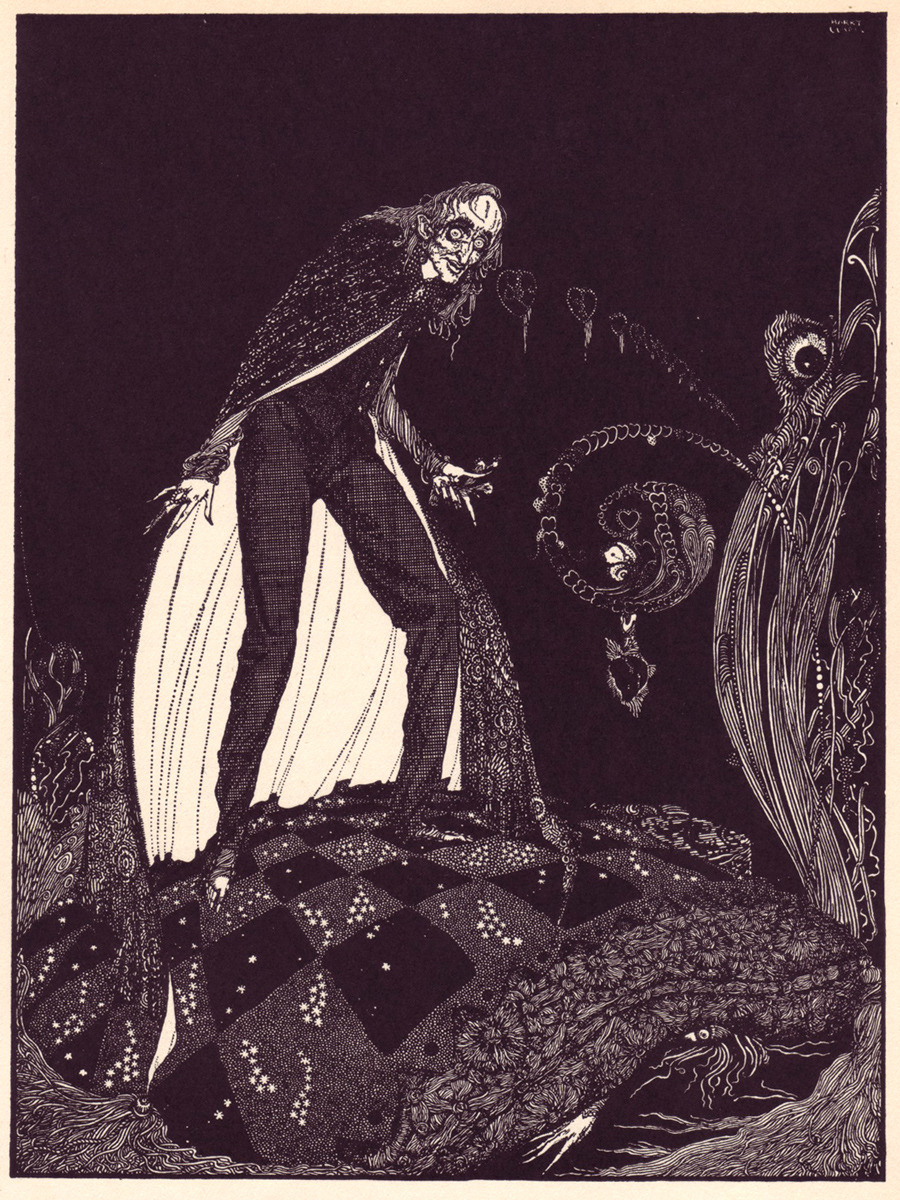
I am a big fan of Edgar Allan Poe; his poems and stories are equally fantastic and I believe him to be one of the best writers and poets of the 19th century, if not of all time. Dante Gabriel Rossetti was also very fond of Poe, especially his most famous poem The Raven. Before and around the time the Pre-Raphaelite brotherhood was formed in 1848 Rossetti made a series of drawings for Poe's poems and verse. This is his drawing for The Raven. It is beautiful and I find really captures the mood of the poem. I have included the wonderful poem here too.
Sunday, 24 March 2013
Music of the Month - March
Good Evening!
This here is my second Music of the Month post, in which I share some of the music I have been listening to recently (February's post here). It is funny and slightly depressing looking back on the last post, for there I am just getting excited for the coming of spring. Oh how wrong I was! The weather now has decided to revert back to arctic midwinter here in Britain - most of the country is covered in snow and it is very cold. The flowers which I planted last week in a bout of luckless optimism have now promptly died from the blanket of snow which mercilessly crushes their fragile stems... I may be slightly exaggerating there but, yes, my flowers are not looking to good, and it has been snowing pretty bad. Even as I type there is a boding black cloud lurking on the horizon, no doubt full of snow again...
Anyway, enough of my moaning about the weather, it is Britain; what can we expect? On with the music!
David McCaffrey - Your Old Ways and Stars
I was very pleased to see the wonderful David McCaffrey this month, supporting Joe Banfi (featured on my last music post). I love listening to live music and watching David, equipped with only his voice and guitar, was spellbinding. His voice is beautiful and he plays guitar very well. I feel very lucky to see this amazing artist just starting out on what will be a lovely career.
This here is my second Music of the Month post, in which I share some of the music I have been listening to recently (February's post here). It is funny and slightly depressing looking back on the last post, for there I am just getting excited for the coming of spring. Oh how wrong I was! The weather now has decided to revert back to arctic midwinter here in Britain - most of the country is covered in snow and it is very cold. The flowers which I planted last week in a bout of luckless optimism have now promptly died from the blanket of snow which mercilessly crushes their fragile stems... I may be slightly exaggerating there but, yes, my flowers are not looking to good, and it has been snowing pretty bad. Even as I type there is a boding black cloud lurking on the horizon, no doubt full of snow again...
Anyway, enough of my moaning about the weather, it is Britain; what can we expect? On with the music!
David McCaffrey - Your Old Ways and Stars
I was very pleased to see the wonderful David McCaffrey this month, supporting Joe Banfi (featured on my last music post). I love listening to live music and watching David, equipped with only his voice and guitar, was spellbinding. His voice is beautiful and he plays guitar very well. I feel very lucky to see this amazing artist just starting out on what will be a lovely career.
Lord Huron - Time to Run and Ghost On The Shore
I was recently introduced to Lord Huron by a wonderful and beloved friend, and I am so very grateful. I love this music - it is wonderful and deeply atmospheric. It is great music to have echoing around the house, and listening to the lyrics is like listening to old stories on summer nights. I love the video for Time to Run - it is like an old western - they are, strangely, my favourite kind of film; you can't beat The Magnificent Seven! Ghost on the Shore has to be my favourite of Lord Huron's songs; it is truly beautiful.
Pokey LaFarge and The South City Three -La La Blues and Hard Times
Oh, how have I only started listening to this music again this month? I discovered Pokey LaFarge a few years ago, but only rediscovered it last week after a friend reminded me of this beautiful music. I love old-timey American music and Pokey LaFarge is a shining example of America's wealth of musical talent. The music he and his wonderful band create is amazing - old-fashioned yet always new; it is the kind of music that will never get old and everybody can relate to in some way.
Monday, 25 February 2013
Music of the Month - February
Spring is nearly here now in Northern England - a few flowers are out and the snow is finally gone. To celebrate the coming of the good weather I have decided to share some of the music I have been listening to to get me through the winter. I think it would be nice if I could carry this on every month, for I love discovering and sharing music - it is such a special thing and an important part of human culture. [Just to clarify I do not own any of these videos, they are off Youtube].
Matt Corby - Brother and My False
All the way from Australia, Matt Corby is one hell of a musician. The music he creates is utterly beautiful and soulful. To me, Matt Corby's voice is the most beautiful in the world - even challenging the legend that is Art Garfunkel! - it is full of soul, passion and grace, and the range to his voice is just outstanding. These two tracks are my favourite, but I find all of his music absolutely wonderful. Have a listen, you will not be disappointed!
Joe Banfi - Nomads and Where Did You Sleep Last Night?
I have recently had the fortune to get tickets to see Joe Banfi in March, on his first headline UK tour for the release of his new EP Nomads (cannot be recommended highly enough). I look forward to this date as I have been a fan of his for a while now. A relatively recent addition to Communion Records' wealth of talents, Joe Banfi is a promising musician. His voice can go from a quiet whisper to an emotional howl often in one song, sometimes in the same line - his music is filled with raw emotion and passion and the stories he tells through song are outstanding. I love the split screen music video for Nomads - a nice piece of filming there!
The Tiger & Me - I Left The Wolves Behind That Night and Pantomime
The Tiger & Me are a wonderful sextet from Melbourne, Australia. Having six talented musicians, including three lead singers, in one band, you would expect the music to be very complex and unusual - it is, and that is part of the beauty of the band. Combining elements of folk, rock, waltz, gypsy and pop, and mixing them together, this band creates some truly wonderful and unique pieces of music. They have recently released a new album The Drifter's Dawn which features the wonderfully bright Pantomime. The epically good I Left The Wolves Behind That Night comes from their amazing album From A Liar To A Thief. The video of that particular song that I have included is great - wonderfully shot, and really shows how talented this band is. Enjoy!
Hope these few songs have brightened up you're day wherever you are!
Best Wishes
The Tiger & Me are a wonderful sextet from Melbourne, Australia. Having six talented musicians, including three lead singers, in one band, you would expect the music to be very complex and unusual - it is, and that is part of the beauty of the band. Combining elements of folk, rock, waltz, gypsy and pop, and mixing them together, this band creates some truly wonderful and unique pieces of music. They have recently released a new album The Drifter's Dawn which features the wonderfully bright Pantomime. The epically good I Left The Wolves Behind That Night comes from their amazing album From A Liar To A Thief. The video of that particular song that I have included is great - wonderfully shot, and really shows how talented this band is. Enjoy!
Best Wishes
Saturday, 16 February 2013
Street Life in London - Photography of John Thomson
When a child in primary school, I remember being decidedly disinterested in history lessons when we learnt about the Victorian era. It is maybe because all they decided to teach us was how horrible life was for children of that time - factory work, coal mines etc - probably to make us feel bad for living a nice life in modern day. Therefore, for a long time, the age of Queen Victoria's reign was my least favourite period of history, but now knowing about all the art and culture of the day I find social history wonderfully interesting!
So, finding the wondrous photography of John Thomson intrigued me greatly. The life of the Victorian London poor has been brought to life, through the beautiful and expressive medium of photography. John Thomson (1837-1921) was a Scottish born photographer, geographer and traveller, who traveled mainly in Far East Asia, documenting and photographing the culture, before returning to London to work on collaborative photography project with friend Adolphe Smith, a journalist. Their project was to document the street life of London - laying the foundations for photojournalism.
The accompianing descriptions for the photographs are written by Adolphe Smith.
John Thomson, self-portrait in China
The accompianing descriptions for the photographs are written by Adolphe Smith.
Covent garden
flower women
"How
different is the Covent Garden of to-day, with its bustle and din, its wealth
and pauperism, its artifices, its hot-house flowers and forced fruit, its
camellias with wire stems, its exotics from far-off climes, to "the
fair-spreading pastures," measuring, according to the old chronicle, some
seven acres in extent, where the Abbots of Westminster buried those who died in
their convent. In those days vegetables were not only sold here but grew on the
spot; and the land, now so valuable, was considered to be worth an annual
income of £6 6s. 8d., when given by the Crown to John Russell, Earl of Bedford,
in 1552. […] When death takes one of the group away, a child has generally been
reared to follow in her parents' footsteps; and the "beat" in front
of the church is not merely the property of its present owners, it has been
inherited from previous generations of flower-women. Now and then a stranger
makes her appearance, probably during the most profitable season, but as a rule
the same women may be seen standing on the spot from year's end to year's end,
and the personages of the photograph are well known to nearly all who are
connected with the market."
London
nomads
"He
honestly owned his restless love of a roving life, and his inability to settle
in any fixed spot. He also held that the progress of education was one of the
most dangerous symptoms of the times, and spoke in a tone of deep regret of the
manner in which decent children were forced now-a-days to go to school.
'Edication, sir! Why what do I want with edication? Edication to them what has
it makes them wusser. They knows tricks what don't b'long to the nat'ral gent.
That's my 'pinion. They knows a sight too much, they do! No offence, sir.
There's good gents and kind 'arted scholards, no doubt. But when a man is bad,
and God knows most of us aint wery good, it makes him wuss. Any chaps of my
acquaintance what knows how to write and count proper aint much to be trusted
at a bargain.'
The Temperance Sweep
"He is now the happy father of a large family, he lives in a house
near Lambeth Walk, where he once humbly worked in the capacity of a mere
assistant. As a master sweep he has an extensive connexion. The money he earns
enables him to subscribe to several benefit societies, and he is entitled to
receive from them 10s. a week in sickness, while his wife will have £46 given
her at his death, or he will receive £18 should she die first. Altogether he is
both prosperous and respected throughout the neighbourhood, where he ardently
advocates the cause of total abstinence, and is well known as the temperance
sweep."
Street
advertising
"There is a certain
knack required in pasting a bill on a rough board, so that it shall spread out
smoothly, and be easily read by every pedestrian; but the difficulty is
increased fourfold when it is necessary to climb a high ladder, paste-can,
bills, and brush in hand. The wind will probably blow the advertisement to
pieces before it can be affixed to the wall, unless the bill-sticker is cool,
prompt in his action, and steady of foot. Thus the "ladder-men," as
they are called, earn much higher wages, and the advertising contractors are
generally glad to give them regular employment. The salaries of these men vary
from £1 to £1 15s. per week, and they work as a rule from seven in the morning
to seven at night."
Street doctors
"The subject of the accompanying
illustration is a vendor of cough lozenges and healing ointment. He was
originally a car-driver employed by a firm in the city, but had to leave his
situation on account of failing sight.”
More photographs from the series will be posted soon... hope you find these interesting for now!
Tuesday, 12 February 2013
Waterhouse's Circe
In my Classics class, we have just finished studying Homer's The Odyssey. I have come to really love The Odyssey - it is a great story and is surprisingly easy to read, given it is over two thousand years old. One of my favourite characters that is included in the epic poem is the Goddess Circe. Circe was a favourite subject of Pre-Raphaelite painters; the wonderful John William Waterhouse produced three finished paintings.
Circe Offering The Cup To Ulysses 1891
This painting depicts the moment when Circe offers the cup of poison to Odysseus/Ulysses which will turn him into an animal, like his crewmen before. In this version Circe looks rather powerful, for at this moment she does not realise that Odysseus has taken an antidote given to him by the god Hermes. The mirror is useful to let much needed light into the scene and to give the viewer a chance to see Odysseus. Circles are used to good effect in this painting; the mirror, the tiled floor, the curve of marble and chair, and the cup. They balance out the straight lines of the column, the diagonal line of Circe's dress and her outstretched arms.
Circe Invidiosa 1892
This second Waterhouse painting is not a depiction of Circe from The Odyssey, but taken from Ovid's Metamorphoses. In Metamorphoses the story is told of Glaucus and Scylla ( another Odyssey character). The sea-god Glaucus falls in love with the beautiful Scylla, and asks Circe for a love potion. Circe, however, fancies taking Glaucus as her lover and, when he refuses, she takes revenge and pours poison into the pool where Scylla bathes; transforming her into a monster. The act of poisoning the water is the scene which Waterhouse chose to depict for his second painting of the Greek sorceress. The strange sea monster (?) at her feet hints at the outcome of this jealous act. Again, different shapes are contrasted in the composition the vertical features such as the rectangular canvas shape, Circe's body elongated by the fall of her dress, and the thin stream of poison, are balanced by the circular shape of the bowl, the curl of the ghostly tail, and the ripples and bubbles in the water. The colours in this painting are really beautiful. the variants of gorgeous blue are balanced by the darker hues of Circe's dress and the woods and the pale colour of her skin. I find her dress is very aesthetic - the lose flowing lines and pattern of peacock feathers, which is also suggestive of vanity.
Circe (The Sorceress) 1911-15
This is the last painting of Circe that Waterhouse did. I think it is quite different from the previous two, for Circe is not shown as a powerful enchantress, but rather a normal woman. She looks quite sullen and thoughtful. The colour orange is prevalent and varies in shades, most striking is Circe's hair and dress. Beautiful!
Best wishes
Monday, 4 February 2013
Harry Clarke - Poe Illustrations 2
To go with the previous post (here) on Harry Clarke's monotone illustrations for Edgar Allan Poe' Tales of Mystery and Imagination, here are the eight colour illustrations. They are, like the others, so beautiful! I am especially fond of the picture for The Tell-tale Heart, for that is my favourite of Poe's stories; Clarke's illustration is just as I imagined the scene to look, yet actually slightly creepier! The murderer's toes are rather scary. I have seen a copy of Poe's book with the 24 monotone illustrations, and what a lovely book!, but never one with the coloured plates as well. That would be wonderful but I assume quite expensive. And also, the beautiful pictures wouldn't be seen - I would rather put the pictures up on my wall. I might just do that... with some nice gold frames.
Sunday, 3 February 2013
Harry Clarke - Poe Illustrations
Being a massive fan of Edgar Allan Poe for years, I was very pleased to discover the wonderful illustrations of Harry Clarke, 1889-1931. Clarke, an Irish stained glass artist and book illustrator, is surprisingly little known these days, despite being a leading figure in the Irish Arts and Crafts Movement and a general amazing artist. I think this a great shame, for his work is really beautiful, similar to Aubrey Beardsley but still unique. For this post I wish to share Clarke's illustrations for Poe's Tales of Mystery and Imagination. These are only the 24 monotone illustrations, I will post the 8 colour plates tomorrow. I really love these works; really dark and gothic, perfectly illustrating Poe's short stories. I love the contrasts between solid black and white and exquisite detail. I wonder what Edgar Allan Poe himself would think of Harry Clarke's imaginings of his stories... I for one think they perfectly embody the masterful and amazing stories of Poe.
Hope you have enjoyed these stunning illustrations as much as I do!
Best Wishes
Subscribe to:
Comments (Atom)


.jpg)